Release 0.29 Kyber
Kyber 0.29: more reach, more fidelity, more control
Kyber 0.29 makes real time control easier to deploy, clearer to see and ready for more environments. Native WebSocket support extends reach across corporate networks, 4:4:4 encoding preserves visual detail at native resolution, and new embedded capture capabilities open the way to Raspberry Pi and edge deployments. It also introduces the first building blocks for managing Kyber fleets at scale.
Here is what that means in practice:
More reach: Kyber now works on networks that used to block it
When the network says no
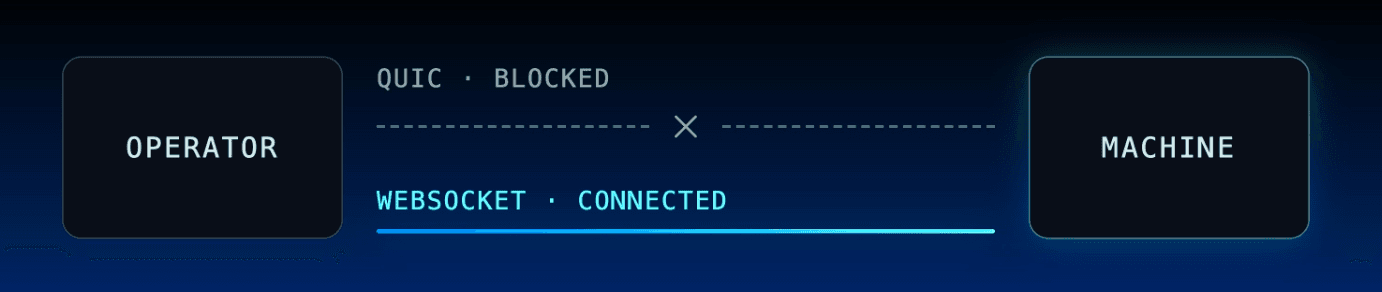
By default, Kyber connects over QUIC, a modern network protocol built for speed. It's one of the reasons Kyber feels instant. The catch: some corporate networks block QUIC, or simply don't accept it. For an operator trying to reach a machine behind a strict firewall, that meant no connection at all.
Kyber finds another way with WebSocket
Kyber 0.29 adds a complete backup route through WebSocket, a standard that almost every network accepts. If QUIC is blocked, Kyber switches to WebSocket and the connection goes through. It's slightly slower, but you stay connected. Your control route remains available, whatever the IT policy.
WebSocket support is now native in the Kyber desktop client. Under the hood, the browser and desktop versions share the same connection code, so every improvement lands on both at once.
More fidelity: every pixel, every color, on any machine
Why remote screens usually look blurry
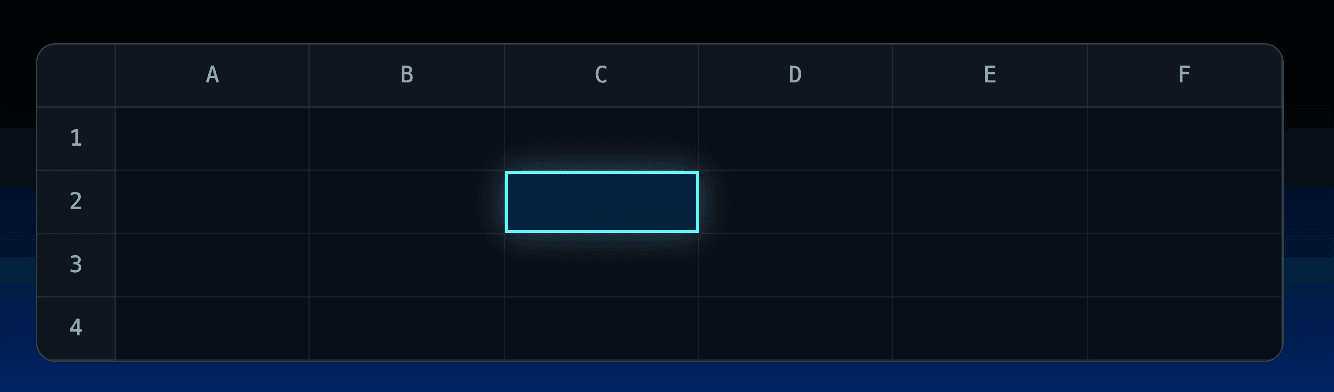
To save bandwidth, most video streaming stores color at a lower resolution than brightness. On a movie, nobody notices. On a work screen, everybody does: tiny spreadsheet cells become hard to read, brand colors drift, thin lines on 3D models bleed into each other.
Full 4:4:4 color at your native resolution
Kyber 0.29 encodes in full 4:4:4 color, which means every pixel keeps its exact color. Text stays crisp, interfaces stay sharp and colors stay accurate, even on machines whose graphics hardware can't encode 4:4:4 on its own.
Kyber also stopped shrinking large screens. Until now, software encoding reduced anything wider than 1920 pixels to Full HD. That limit is gone. A 4K desktop now streams in 4K.
Your Excel stays readable, wherever it runs.
More platforms: real time control, even on a Raspberry Pi
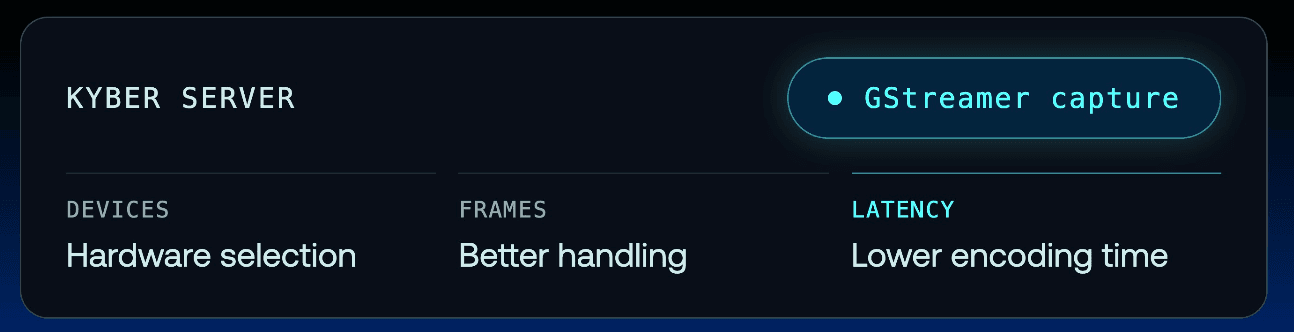
Kyber server can now capture images through GStreamer, the go to toolkit for audio and video on many embedded devices. This release also brings smarter hardware selection, better frame handling and lower encoding time, plus a fix for a crash on Intel Arc graphics cards.
Together, these changes let us tune Kyber precisely for Raspberry Pi and other small, low power devices. That matters for robotics, drones and every edge device where Kyber's low latency streaming has to run on modest hardware. A dedicated Raspberry Pi package is coming soon on GitLab.
More control: the building blocks for managing Kyber fleets at scale
A management portal is on the way, to let teams see and control every Kyber machine from one place. Kyber 0.29 lays the groundwork.
A heartbeat for every machine
A new agent lets each Kyber host send a small signal about every 10 seconds to say it's online and ready. If the signal stops, you know the machine is unavailable. No guessing, no manual checks.
Sessions that stay signed in
Authenticated connections now get automatic token exchange and renewal. A token works like a temporary digital pass. Kyber now renews it in the background, so secure sessions stay open without asking users to sign in again.
One click access with kyber:// links
Kyber now has its own link format. Click a kyber:// link in a browser, an email or a dashboard, and the desktop client opens directly on the right machine.
Easier to deploy on macOS
The Kyber server for macOS now ships as a complete package. It's simpler to install and simpler to distribute across a fleet of Macs. Next up: a fully operational, signed package that macOS will trust out of the box.
Other improvements and fixes
Audio: the Opus audio codec moves to version 1.6.1.
Security: OIDC, the standard behind single sign on, now supports optional audience validation. Kyber can check that a login token was issued for Kyber and not for another app.
Certificates: Kyber now checks secure connections against your operating system's own list of trusted certificates.
Web client: pointer lock now works correctly in games that hide the cursor.
VLC: the Video buffer feature now works with VideoToolbox, Apple's hardware video decoder.
Reliability: cleaner exits when no display is available, faster session teardown, a GCC 16 build fix and quieter logs.
Get Kyber 0.29
Kyber 0.29 is live now. Everything you need to get started is here