Physical AI Needs a Nervous System
Kyber for robotics
The infrastructure layer between human intent and machine action
Training, monitoring, and instant human takeover for robots at any scale.
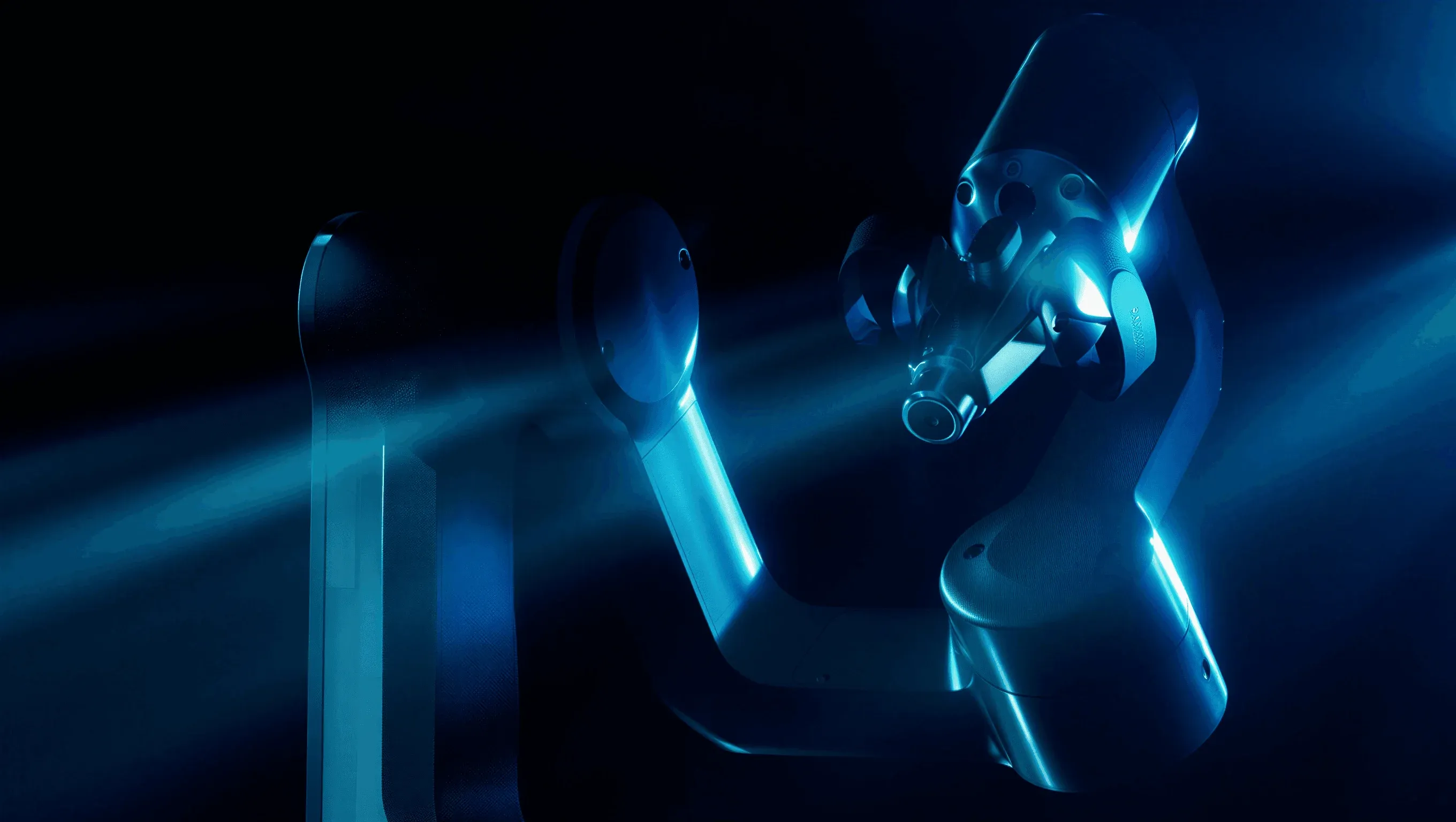
The protocol that makes
remote machines feel local.
The hardware is shipping. The AI is improving.
But the connection between them is still running on a protocol designed for video calls a decade ago.
Kyber is the infrastructure layer that was missing. Single-digit millisecond latency. Full sensor synchronization. The kind of stack that only the biggest players could afford to build internally — now available to everyone.
Open source. Full docs.
See the latency* yourself.
Commercial licensing. Dedicated support. Custom integration.
capabilities
Train. Monitor.
Takeover.
Kyber is the Human-in-the-Loop stack, so robots actually get better.
Kyber's full sensor fusion means perfectly synchronized data for AI model training.
Learn from humans
The most valuable training data comes from the moment a human intervenes to fix a mistake. But if your inputs aren't synchronized to a single clock, timestamps don't align, and your AI learns from corrupted data.
Kyber's latency makes real-time observation possible.
Watch at scale
Even when machines work autonomously, someone needs to watch. One operator can monitor dozens of robots if the infrastructure is fast enough.
Kyber operates below the human reaction threshold.
Intervene instantly
When autonomy fails, a human needs to grab the wheel.
Not in 200 milliseconds — that's too late. In the time it takes to perceive the problem.
Faster Than Your Hand-Eye Loop
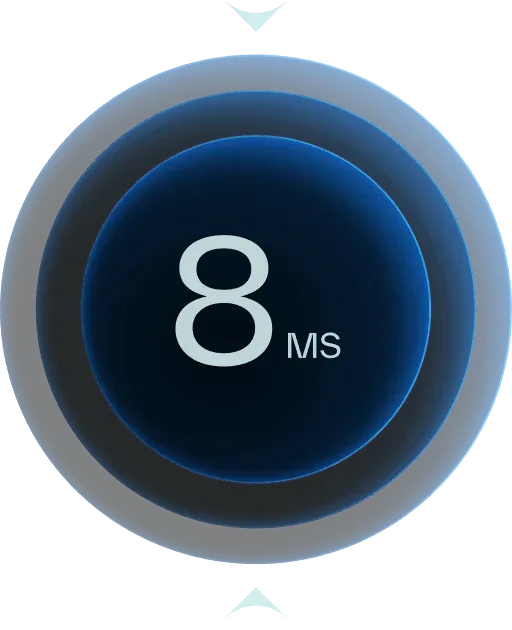
Your hand-eye coordination runs at 30-50ms. Kyber delivers single-digit millisecond latency. The robot doesn't respond after your hand moves — it responds as your hand moves.
That's the difference between control and observation.
Synchronized Video, Audio, Control
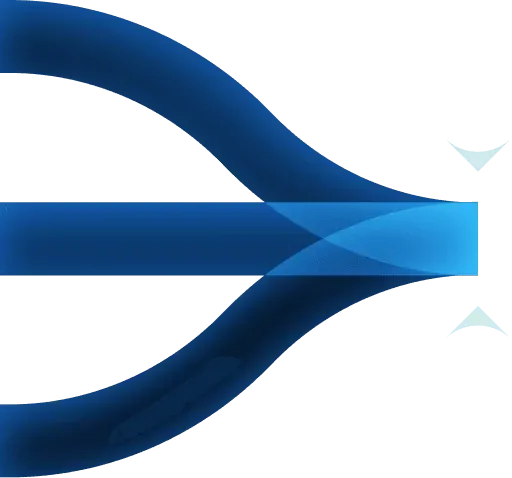
A robot has cameras, microphones, force sensors, position trackers — each running on its own clock, each drifting from the others. When you're collecting training data, you need to know exactly what the robot saw at the exact moment it felt contact.
Kyber rewrites everything to a single timeline. Video matches audio matches control commands. No drift. No desync. Perfect timestamp alignment across all sensors
Quality Drops. Control Doesn't.
Networks fail. Bandwidth fluctuates. Kyber over-transmits packets and rebuilds missing data locally. When bandwidth drops, video quality drops. Latency stays constant. A blurry image in real-time beats a perfect image two seconds late.
Integrate Once. Deploy Everywhere.
ROS, Linux, Windows, every major robot operating system. One SDK integration. Deploy to humanoids, industrial arms, surgical systems, warehouse fleets — without rebuilding the stack for each platform.
use cases
From humanoids to industrial arms
1.4 million robots by 2035. All of them need Kyber.
WebRTC Was Built for Video Calls.
You're Building Robots.
Goldman Sachs projects $38 billion in humanoid robots by 2035. But most robotics companies are still controlling them with a protocol designed for video calls between humans. 100-200ms latency is fine for conversation. It's dangerous for machine control.
The companies with unlimited resources built custom teleoperation stacks. It took years and tens of millions of dollars. Their solutions are proprietary, unavailable to anyone else. Kyber is that same capability — single-digit millisecond latency, full sensor synchronization, defense-grade security — available to everyone else.
Frequently Asked Questions
Can I install Kyber myself?
Yes you can, just go to our gitlab installation guides : https://gitlab.com/kyber/kyber#where-to-start
What support do you offer?
Kyber support depends on the licence you use.
If you use the open source licence (AGPL v3), you will be able to access the community support. You can find help here : https://www.reddit.com/r/kyber/
You can also access dedicated support by acquiring a commercial licence and contact our sales team directly.
Where are you located?
Our main offices are in Paris and we also have offices in San Francisco and Singapore to support our client's needs.
How do you support the Open Source community?
We are strong supporters to the Open Source Community.
Kyber releases its main product on a AGPL v3 Licence.
Kyber is based on VLC libraries and FFMpegs and contributes strongly to their evolutions.
We also mainly use open source solutions that we self-host often. And we try to contribute to their evolutions as much as we can.
What licence do you use?
Kyber uses a dual licence model.
Open Source AGPL v3 :
- Free to use, but inherits all properties from the AGPL Licence : each solution integrating kyber must be published using the Open Source AGPL Licence.
- Streaming only
- Community Support
Commercial Licence : this licence enables :
- Dedicated support
- Integration support in your ecosystem
- Access to specitifc features, such as kyhub, our administration portal
- Shared source (without distribution rights)